Word Challenge-Daily Word Game
MeeGame StudioWord
4.31.01K Reviews
- Version
- 1.3.6
- Installs
- 1.00M
- Age Rating
- Everyone
Screenshots
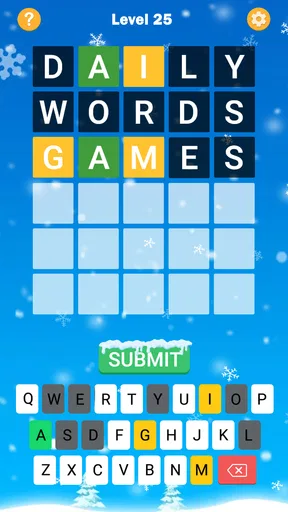
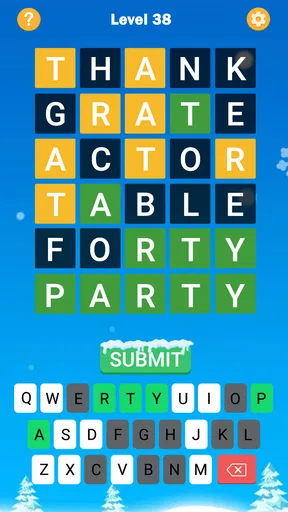
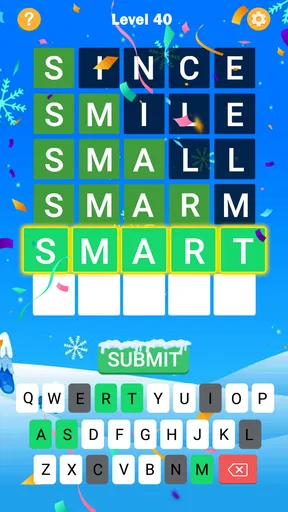
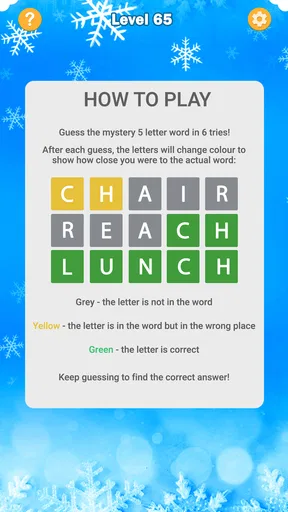
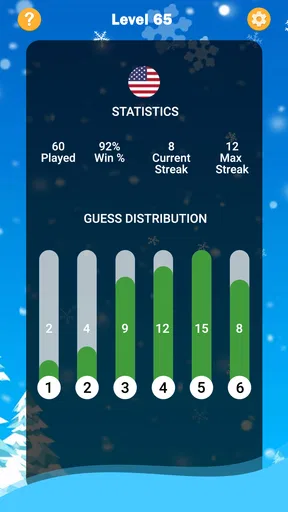
Our Review of Word Challenge-Daily Word Game
 Analysis by Appyee
Word Challenge-Daily Word Game is the kind of word game I open when I want a short mental break rather than a long gaming session. Its central idea is simple: work toward the daily word, make guesses, and enjoy the small satisfaction of narrowing down the answer. I found that simplicity useful because it removes the usual setup time. There is no complicated story to learn and no large collection of controls to master before playing.
MeeGame Studio presents it as a free word game for everyone, and that description matches the experience I had. It is aimed at casual players who enjoy vocabulary, deduction, and a repeatable daily routine. The game has reached over a million installs and holds a 4.3 average from roughly thirty-one thousand ratings, which suggests that its straightforward format has found a sizeable audience. That popularity does not make it perfect, but it does make the game easy to consider as a low-commitment option.
How the daily format feels in everyday use
The strongest part of the game is the way it turns a few spare minutes into a focused activity. I can imagine using it while waiting for a coffee, taking a break between tasks, or winding down before bed. Because the objective is a word rather than a character, map, or collection of items, the mental effort stays concentrated. I am thinking about spelling, possible meanings, and the information revealed by each attempt instead of managing several systems at once.
That focus also gives the game a different rhythm from a traditional crossword or a large word-search collection. A crossword usually asks me to work through many clues, while a word search is more about scanning a grid. Here, the appeal comes from making a limited series of decisions and learning from each one. The daily structure gives the session a natural stopping point, which is helpful if I want entertainment that does not encourage a long, uninterrupted play period.
I particularly like the way this format can become a small vocabulary habit. Even when I know the answer quickly, I still have to consider whether my first thought is the most useful guess. When I do not know it, the process encourages me to think about common letter patterns and words that might fit. That makes the game more mentally active than simply tapping through a list of familiar terms.
What happens when I play quickly
For speed expectations, this is a game I would approach as a lightweight experience. Its basic word-guessing concept does not suggest the kind of heavy visual workload associated with action games or large three-dimensional titles. In practical terms, the main performance question is less about graphics and more about whether the interface responds cleanly while I enter guesses and move through the current challenge.
Short sessions are where it makes the best impression. I can open it with a clear goal, make progress, and close it without feeling that I have abandoned a larger task. That makes it suitable for people who dislike games that require a substantial time investment before they become enjoyable. It also means the game can fit around a routine instead of demanding that the routine change around it.
There is a trade-off here. Players who want a large campaign, constant new environments, or a wide range of modes may find the daily-word concept narrow. The same focused design that makes the game approachable can make it feel repetitive to someone who wants continuous variety. I would not choose it as my main game for a long trip unless I already knew that its restrained format suited me.
Using it during heavier play periods
One useful way to judge a word game is to consider what happens when I return to it repeatedly in one day. The daily format is naturally better for spaced-out visits than for marathon sessions. If I play once in the morning and once later, the game works as a pair of small puzzles. If I keep reopening it immediately after finishing, the limited daily focus may feel less satisfying than an alternative with an endless puzzle supply.
This is also where expectations matter. A person looking for a quick concentration exercise can treat the daily challenge as a deliberate boundary: solve it, reflect on the result, and move on. Someone who wants to keep playing for an hour should first decide whether the available challenge structure offers enough reason to continue. I see the title as strongest when it is used intentionally, not when it is forced into the role of a full-length word-game collection.
A practical tip is to avoid spending every attempt on an obscure guess simply because it feels clever. I get more value by using early guesses to test useful letter combinations and familiar word structures. That approach turns each attempt into information rather than treating it as a random shot. It is a small change, but it makes the game feel more thoughtful and reduces the frustration of wasting a promising opportunity.
Reliability and the value of a predictable routine
For me, reliability in this type of game means being able to return to the daily activity without unnecessary complexity. The uncomplicated premise helps: I know why I am opening it, and I do not need to remember a complicated control scheme. The current version is 1.3.6, so users are getting a maintained version rather than an abandoned-looking first release. I still prefer to keep expectations realistic; a version label alone does not guarantee that every device or session will feel identical.
The daily design can also make recovery from an interrupted session less stressful than recovery in a longer game. If I am distracted or need to leave, I am not losing hours of progress or a carefully built character. That is a genuine advantage for busy users. The downside is that a daily challenge may feel more significant precisely because it is limited. If I make an early mistake, I may feel that I have affected the one puzzle I wanted to solve, rather than simply moving on to another level.
I would recommend treating mistakes as part of the learning loop instead of judging the whole game by one difficult word. Word knowledge varies widely, and a puzzle that feels obvious to one player can be unfamiliar to another. The game is at its most enjoyable when I accept that not every result measures intelligence; sometimes it measures exposure to a particular word or spelling pattern.
Device limits and practical expectations
The game supports devices running Android 7.1 or later, which covers a broad range of Android hardware but still matters if I am using an older phone or tablet. Before installing, I would check the operating system rather than assuming that every older device is supported. That is especially relevant for people who keep a backup phone for simple games and everyday tasks.
Because this is a word-focused title, I would expect it to be less demanding than visually intensive games, although I would not turn that expectation into a promise about battery use or memory on every model. Older hardware can behave differently from newer devices, and background apps, available storage, and the condition of the operating system can all affect the experience. My practical advice is to judge it by how comfortably your device handles other small games, not by the category alone.
The game is free to install, while optional purchases range from ninety-nine cents to eighteen dollars and ninety-nine cents per item. That makes it easy to try without paying upfront, but I would still look carefully at purchase prompts before confirming anything. For a casual daily game, I prefer to decide in advance whether I am comfortable spending money on extras, rather than making an impulse purchase during a frustrating puzzle.
The Everyone content rating also makes the game approachable for a broad audience. That does not mean every player will enjoy the same vocabulary challenge. Younger players may benefit from playing alongside a parent or teacher when an unfamiliar word appears, while adults can use the game as a small spelling and deduction exercise. I would see it as accessible entertainment, not as a replacement for structured language learning.
Where it beats familiar alternatives
Compared with crossword apps, this game feels less demanding in terms of time and setup. A crossword can be rewarding when I want a deeper puzzle, but it can also leave me staring at several clues with no clear route forward. The daily word format gives me a tighter target. Compared with word-search games, it asks for more active reasoning and less visual scanning, so it suits me better when I want to think about language rather than hunt through a grid.
It is also different from an endless anagram game. Endless modes are better when I want a steady stream of tasks, while this title’s daily emphasis encourages restraint. The choice comes down to the kind of energy I have. If I want a compact challenge that fits into a routine, I would choose this one. If I want to keep playing until I am tired of words, I would look for a game built around unlimited rounds.
Another comparison is with larger educational vocabulary tools. Those usually offer lessons, word definitions, progress tracking, or deliberate study plans. This game is more relaxed. I can learn something incidentally by encountering a word, but I would not install it expecting a complete course. Its strength is making language practice feel like a game; its weakness is that it may not provide the structured feedback a serious learner wants.
Small strategies that make the puzzle more enjoyable
My first useful habit is to think in terms of information value. Instead of choosing a word only because it seems likely to be the answer, I try to select guesses that test several common letters or patterns. This helps me make progress even when the guess is wrong. It is a better approach than repeatedly entering near-identical words that reveal very little.
My second tip is to separate vocabulary difficulty from game quality. If a word feels unfamiliar, I do not immediately assume the puzzle is poorly designed. I consider whether I am comfortable with the game’s level of challenge and whether I enjoy discovering words outside my everyday speech. Players who want only common vocabulary may find occasional surprises irritating, while language enthusiasts may see them as the best part.
My third tip is to use the game as a short reset rather than as a distraction during work that needs deep concentration. The puzzle is engaging enough to interrupt a routine, and that is useful when I intentionally want a break. It can be less helpful if I keep checking it whenever a task becomes difficult. Setting a simple boundary—one attempt at a chosen break time—keeps the game refreshing instead of turning it into another source of interruption.
These habits also answer an important question: is it suitable for beginners? I think so, provided the player enjoys guessing words and accepts that some rounds may be harder than others. There is no need to be a dedicated word-game expert to start. However, a player who dislikes spelling uncertainty or feels annoyed by not knowing an answer may prefer a game with hints, tutorials, or adjustable difficulty.
Who should install it, and who should skip it
I would recommend this game to someone who wants a calm, compact word challenge with a clear daily purpose. It is a good match for commuters, casual players, families looking for a simple shared puzzle, and anyone trying to replace a few minutes of aimless scrolling with something more active. Its free entry point makes trying it straightforward, and the Everyone rating keeps the audience broad.
I would be more cautious about recommending it to competitive players who need leaderboards, elaborate progression, or a large variety of modes. I would also steer away from it if the main goal is formal vocabulary improvement. The game can encourage curiosity, but it is not the same as a dictionary, flashcard system, or guided language course. A player who wants constant novelty may likewise prefer an app with a large puzzle library rather than a daily-centered experience.
For families, I see a nice opportunity for conversation. Instead of simply checking the answer, players can explain why a guess seemed plausible, discuss unfamiliar words, and compare different approaches. That gives the game more value than solitary tapping, especially when one person knows the word and another is learning it. The important point is to keep the mood light; a daily puzzle works better as a shared challenge than as a test of who has the strongest vocabulary.
My performance verdict after weighing the trade-offs
My overall impression is that Word Challenge-Daily Word Game succeeds because it keeps its purpose narrow. MeeGame Studio has built a word title around a repeatable daily moment rather than trying to compete with every type of puzzle game at once. The result is easy to understand, quick to approach, and well suited to short sessions. Its main limitation is the same feature that defines it: players seeking extended play or broad variety may soon want something more substantial.
I would install it when I wanted a small mental workout that did not require a powerful gaming device or a large time commitment. I would not treat it as a demanding technical showcase, and I would avoid making assumptions about performance on every older phone simply because the game is visually simple. The Android 7.1 minimum gives users a clear compatibility checkpoint, while the free price makes the decision to try it relatively low risk.
The in-app purchase range is worth keeping in mind, particularly for anyone who prefers completely uncomplicated free games. I would play first, decide whether the daily routine genuinely adds value, and only then consider spending anything. That approach prevents the purchase system from becoming part of the decision before I know whether the core word challenge fits my habits.
In the end, I see this as a focused, accessible choice rather than an all-purpose word-game replacement. Its 4.3 average and audience of more than a million installs show that many players have found the format appealing, but the right question is whether I want a daily puzzle or an endless collection. If I want a brief, thoughtful pause with words at the center, I would happily recommend it. If I need deep crossword solving, structured study, or hours of uninterrupted play, I would choose a different kind of app.
Verdict
Strengths of Word Challenge-Daily Word Game
- Short daily rounds fit easily into a quick break.
- Clues gradually increase the challenge without feeling overwhelming.
- Helpful hints can keep difficult puzzles moving.
- Clean interface makes the game easy to learn.
- Daily puzzles encourage a consistent playing habit.
Limitations of Word Challenge-Daily Word Game
- Some puzzles may depend on regional spelling or vocabulary.
- Hint options can reduce the satisfaction of solving unaided.
- Difficulty may feel uneven between different daily challenges.
- Repeated word patterns can make later rounds predictable.
- Progress may feel limited if you prefer longer game sessions.
Similar Picks in This Category
View All
Word Search - Word Puzzle Game
Bluetile4.8

Word Search Quest - Puzzles
Blackout Lab4.8

CodyCross: Crossword Puzzles
Fanatee, Inc.4.7

Words of Wonders: Crossword
Fugo Games4.9

Wordscapes: Word puzzle game
PeopleFun4.7

Word Search Explorer
PlaySimple Games4.9
Frequently Asked Questions
What is Word Challenge-Daily Word Game?
Word Challenge-Daily Word Game is a casual vocabulary and word-puzzle app built around short daily challenges. Players typically form words from available letters, solve compact puzzles, and try to improve their score or completion streak. Its simple format makes it suitable for quick sessions, whether you want a relaxing brain exercise, a way to expand your vocabulary, or a small daily challenge during a break.
How does the gameplay work?
The game presents word-based challenges that require you to identify, arrange, or create words using the letters and clues provided on screen. Each round is generally easy to understand, but later puzzles may demand stronger spelling skills, broader vocabulary, and more careful thinking. Progress usually depends on solving puzzles accurately, while hints or assistance may be available when you become stuck.
Is Word Challenge-Daily Word Game free to download and play?
The application can generally be downloaded at no initial cost, allowing users to try its core word puzzles before deciding whether they want additional features. However, availability of advertisements, optional hints, extra lives, premium content, or in-app purchases may vary by platform and version. Before downloading, check the app-store listing for current pricing, subscription details, and purchase information.
Can I play Word Challenge-Daily Word Game offline?
Some basic puzzles may remain accessible without a continuous internet connection, which is useful for playing while traveling or when mobile data is limited. Nevertheless, features such as advertisements, daily challenge synchronization, leaderboards, cloud saving, updates, and in-app purchases may require internet access. Offline behavior can differ between Android and iOS, so testing the app after installation is recommended.
Is the game suitable for children and beginners?
The straightforward controls and short word puzzles make Word Challenge-Daily Word Game approachable for beginners and casual players. It can also provide useful spelling and vocabulary practice, although difficulty may increase as you progress. Parents should still review the store rating, advertising behavior, privacy information, and any purchase options, particularly if children will use the app without direct supervision.
Play our best games!


